
Climate tech’s candor problem (#225)
Weekly Brief: 3 decisions. 3 minutes.

Welcome to Climate CEOs — where climate tech leaders navigate growth, capital, and existential dread. Built from conversations with 300+ climate CEOs and 25 years of meditation attempting to remain calm while reading board decks.
This Week:
FINANCE — Watt-Bit Spread: When customers will pay anything
TOOLS — Radical candor: Where are you in this quadrant?
LEADERSHIP — Autonomy vs. neglect: Have you moved in the wrong direction?
1. Finance
Watt-Bit Spread: When customers will pay anything
Definition: The delta between the cost of a watt and the value of the bits created by those watts. This ratio is extreme today in data centers.
Brian Janous, co-founder of Cloverleaf Infrastructure and former Microsoft VP of Energy, coined the term.
For utilities: 1 electron in 2027 = 1 electron in 2030.
For AI companies: 2027 vs. 2030 might mean $10B of lost market cap.
He says we need a “new regulatory paradigm that enables utilities to capture some of these excess rents…to enable them to accelerate investment in their systems to capitalize on this load growth opportunity.”
So what?
Speed: Where would customers accept an 80% solution today instead of a perfect solution next year?
Profitability: How could you serve customers with higher profit margins, where their price inelasticity means quicker sales for you?
2. Tools
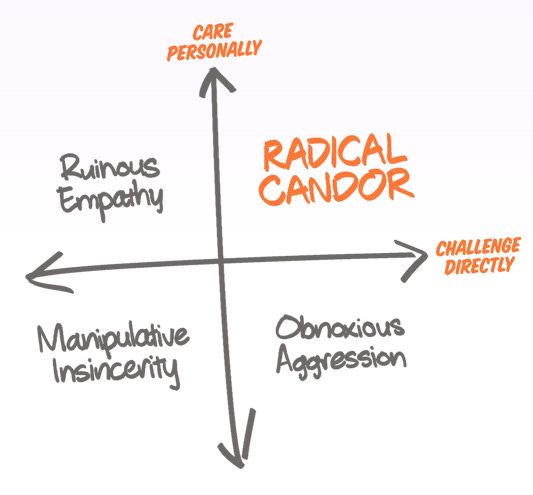
Radical Candor: Where are you in this quadrant?
Every founder claims to want radical candor. Until someone uses it.
Most leaders think they operate here: Care personally + Challenge directly
Reality is usually different.
The two most common modes I see in CEOs:
(a) Ruinous empathy
Avoiding hard conversations until performance reviews become awkward documentaries.
(b) Obnoxious aggression
Efficiency worship disguised as leadership.
Kim Scott built the famous quadrant after coaching executives at Google, Dropbox, and Apple.
Her insight:
Most people fail not from cruelty, but from conflict avoidance.
So what?
Avoidance: Which conversation have you postponed for more than three weeks because it feels uncomfortable?
Leadership signal: If your team were honest, would they say you care more than you challenge, or challenge more than you care?
3. Leadership
Autonomy vs. neglect: Have you moved in the wrong direction?
Research from Gallup, Stanford, and Penn State finds that autonomy produces:
20–30% higher engagement
20–40% higher job satisfaction
10–20% productivity gains
25–50% lower turnover risk
We hear about the value of “send-delete” people who get sh*t done. They just need clarity, not supervision. Tell them what matters, and it gets done.
But autonomy has a shadow.
When founders get busy, autonomy quietly mutates into neglect. Teams interpret silence as approval.
So what?
Micromanaging: Where are you guilty of this? How might it create team churn?
Leadership rhythm: Which critical direct report have you not had a substantive 1:1 with in the past 30 days?
Finally…
To hear why a climate investor thinks hard tech creates the best moats, listen to our Climate CEOs podcast: Deep Tech Insights: Investor with $500M+ of Assets | Tom Chi, At One Ventures
If you know a CEO who can lead with more radical candor, forward this to them. They’ll either thank you. Or stop inviting you to their events.
~ Chris
3 ways I might help you grow:
Climate CEO Peer Group — Invite-only forum capped at 50 climate tech CEOs
Podcast — 270+ interviews with climate CEOs and investors on capital and growth
LinkedIn — Real-time observations on climate capital and CEO psychology
P.S. Join 40,000+ climate entrepreneurs and investors who read Climate CEOs annually.